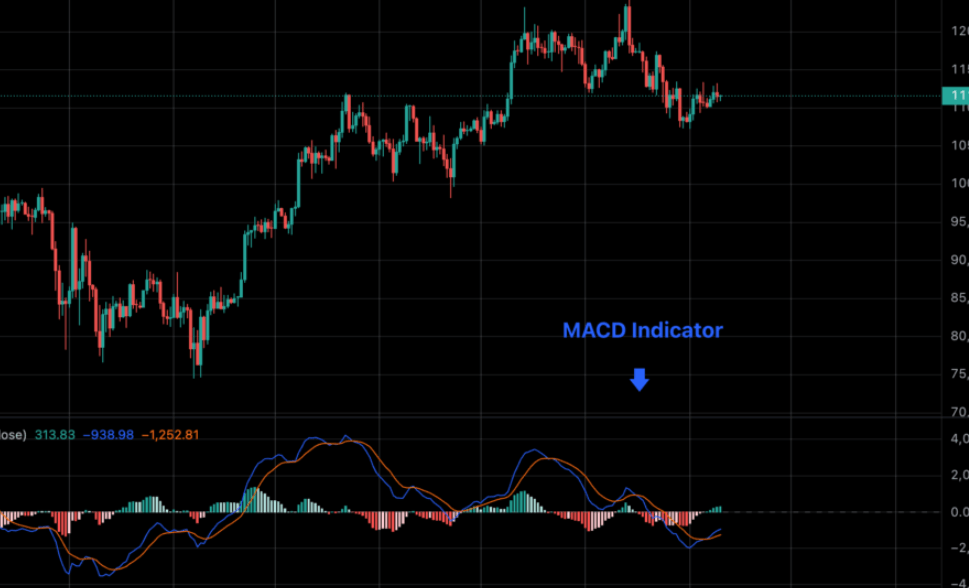
The MACD indicator compares a fast and a slow EMA to reveal trend momentum and direction, producing a MACD line, a signal line, and a histogram. In crypto, real-time crossovers and histogram shifts provide actionable cues, while divergences signal potential reversals. When paired with price structure, RSI, and on-chain metrics, MACD values can be filtered to reduce noise and whipsaws. The approach is data-driven, but practical effectiveness hinges on disciplined risk rules and multi-timeframe confirmation, leaving key questions unresolved.
What MACD Is and Why It Matters in Crypto
The MACD, or Moving Average Convergence Divergence, is a momentum oscillator used to gauge the strength and direction of a price trend by comparing two moving averages.
In crypto, it quantifies trend beta, aiding objective decision-making. This supports strategy sourcing and enhances risk management through clear entry/exit signals, divergence checks, and disciplined position sizing within volatile markets.
See also: FinTech: The Digital Transformation of Finance
How MACD Is Calculated and Interpreted in Real Time
MACD is computed in real time by continuously updating three core values: the fast EMA, the slow EMA, and the MACD line itself. Inference relies on MACD crossovers, signal alignment, and histogram interpretation while acknowledging MACD limitations. Real time latency affects responsiveness; Volume confirmation strengthens trend validity, and crossovers paired with volume help filter false signals for precise crypto decisions.
Spotting Bullish and Bearish Signals With MACD
Macd signals emerge from positive or negative crossovers, sustained divergences, and histogram momentum shifts.
Traders assess trend reversals by confirming convergence across timeframes, aligning MACD with price structure, and watching for corroborating volume, minimizing false signals while preserving disciplined decision rules.
Enhancing MACD With Other Tools for Crypto Decisions
What practical gains arise when MACD is combined with complementary tools in crypto decision-making, and how do these synergies reduce false signals?
The analysis emphasizes trend convergence and volume confirmation, using MACD as a core oscillator alongside price action, RSI, and on-chain metrics.
Data-driven filters improve timing, reduce whipsaws, and strengthen risk-adjusted decisions within disciplined, freedom-oriented trading frameworks.
Frequently Asked Questions
How Reliable Is MACD Across Altcoins and Tokens?
The reliability across assets is variable; cross portfolio applicability depends on liquidity and volatility. MACD forecasts price reversals but indicators misinterpretations occur amid volatile market adjustments, while non price data applicability remains limited, demanding rigorous, data-driven validation.
Can MACD Predict Price Reversals Before Indicators?
MACD cannot reliably predict price reversals before indicators; it signals shifts after momentum changes. In symbolic terms, arrows point after the wind. However, macd cross accuracy improves with confluence of volume, trend, and structural supports.
What Are Common MACD Misinterpretations Beginners Make?
Common mistakes include mistaking MACD crossovers for guaranteed reversals and ignoring divergence context; interpretation traps involve defaulting to price action alone and neglecting histogram nuances, buffers, and timeframe alignment, which distort probabilistic assessments in data-driven analysis.
How to Adjust MACD Settings for Volatile Markets?
In shadowed halls, the analyst notes that adjustment considerations for MACD settings demand sensitivity to volatility tuning. They recommend data-driven calibration with shorter EMAs during spikes, longer horizons otherwise, balancing responsiveness and noise to preserve trading freedom.
Does MACD Work on Non-Price Data Like Volume?
The question: does macd work on non-price data like volume? It generally applies to price series; however, macd volume analysis may reveal lag and anomalies. macd volume requires careful normalization; macd anomalies can mislead without validation.
Conclusion
In the quiet provenance of price data, MACD acts as a well‑timed metronome, its crossovers and divergences echoing prior price structure. Like a lighthouse in fog, the histogram highlights momentum shifts, while real‑time adoptions of RSI and volume reinforce direction. When aligned with risk discipline, MACD distills signal from noise, not guarantees. It remains a technical compass—best used with corroborating indicators and disciplined rules to navigate crypto’s choppy seas.