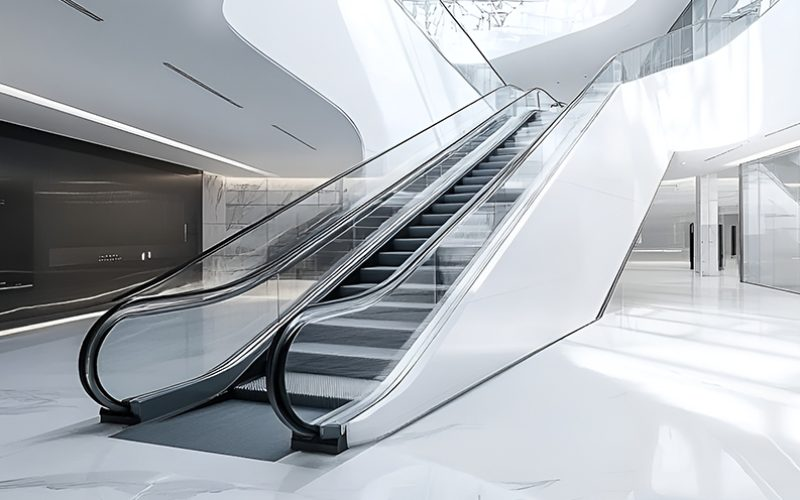
Not every escalator is built for the same job. A quiet office lobby with modest foot traffic has very different requirements than a shopping mall entrance seeing thousands of trips a day. Looking closely at how a manufacturer approaches its flagship, high-traffic escalator line gives a useful window into what actually separates equipment built for demanding environments from equipment built for lighter, occasional use.
Built Around Sustained Heavy Use
A flagship line meant for shopping malls and commercial buildings needs to be engineered around a simple assumption: it will be running almost constantly, carrying a steady stream of passengers throughout the day, often for years without a significant break in service. This assumption shapes nearly every design decision, from the materials used in the step construction to the type of motor and control system chosen to drive the mechanism.
Stainless steel construction is a common choice for this kind of demanding application, since it needs to meet the wear and tear of high passenger traffic while still holding up structurally over a long service life. A component that looks fine on day one but degrades noticeably within a year or two under heavy use is not actually suited to this kind of environment, which is why material selection for high-traffic lines tends to prioritize long-term durability over initial cost.
The Drive System Makes a Real Difference
The technology driving an escalator’s movement affects far more than most passengers realize. A permanent magnet synchronous gearless traction motor, paired with an advanced VVVF controller, is designed to deliver smooth, quiet, and efficient operation. This matters on two levels. For passengers, it translates into a ride that feels stable and comfortable rather than jerky or noisy. For building operators, a more efficient drive system tends to mean lower energy consumption over the escalator’s operating life, which adds up meaningfully across years of near-continuous use.
Escalator manufacturer building flagship lines around this kind of technology, such as GOTS Elevator’s TKJ and TKU series, are specifically targeting the demanding requirements of high-traffic commercial venues, where dependable performance despite extensive daily usage is the entire point of the product.
Fitting Into the Actual Building
A powerful, well-built escalator mechanism still needs to physically fit and function correctly within a specific building’s architecture. Detailed graphic design and 3D modeling work during the planning phase helps ensure the escalator integrates properly with the surrounding site, accounting for factors like ceiling height, floor openings, and the surrounding structural elements that the escalator has to work within rather than around.
This kind of planning matters more than it might seem, since an escalator that is mechanically excellent but poorly integrated into its physical space can create real problems during installation, or worse, compromise how smoothly it actually operates once it is up and running.
See also: Top 5 Tableau Dashboard Pitfalls for Business Analytics Students (and How to Avoid Them)
Meeting International Standards as a Baseline
Compliance with international escalator safety standards is not an optional add-on for equipment used in public commercial spaces. It is the baseline expectation, and a flagship line built for high-traffic venues needs to meet these standards consistently across every unit produced, not just in a controlled testing environment. This consistency is exactly what allows facility managers to trust that the escalator installed in their building will perform the way it was specified to, day after day, under real-world conditions.
Why This Level of Engineering Matters
A flagship escalator line built specifically for demanding commercial environments represents a different tier of engineering than general-purpose equipment. The combination of durable materials, an efficient and quiet drive system, careful site integration planning, and consistent compliance with safety standards is what allows an escalator to handle years of heavy daily use without becoming a recurring maintenance headache or a safety concern for the thousands of people who step onto it without a second thought.